Games: Pixel P.I. and earlier prototypes
§← All cases
Pixel P.I.: how it's built
Pixel P.I. is a detective game I designed, programmed and released alone: Windows, macOS and Linux, in Early Access on Steam since August 2025, with 200+ copies sold. Its core mechanic has no dialogue menus. Players type any question they like to a suspect, and if it is one the police asked, that statement unlocks. To catch a lie, they pick a clue and write in their own words why it proves the statement wrong. Two engines I built and keep private judge the questions and the debunks.
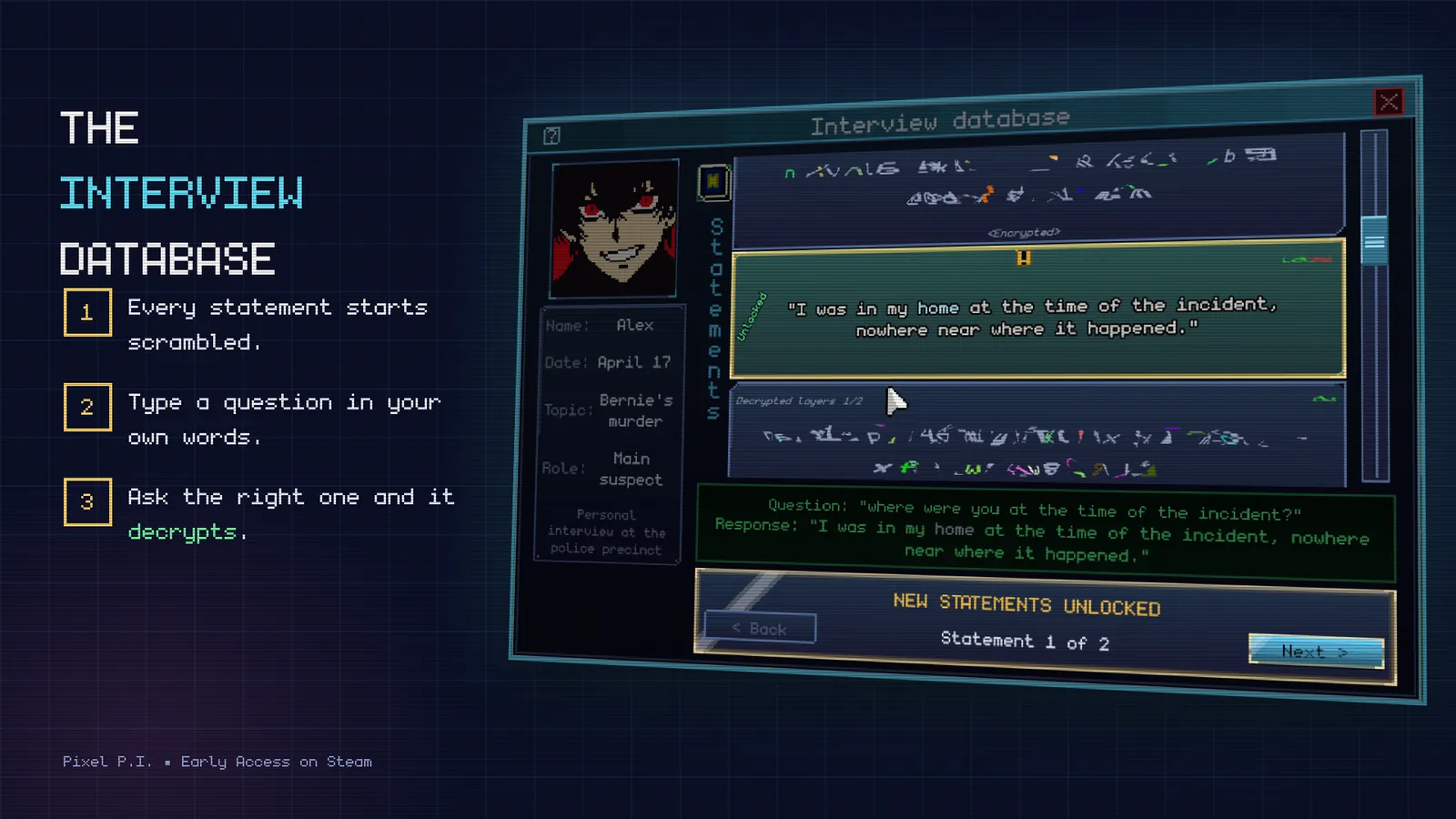
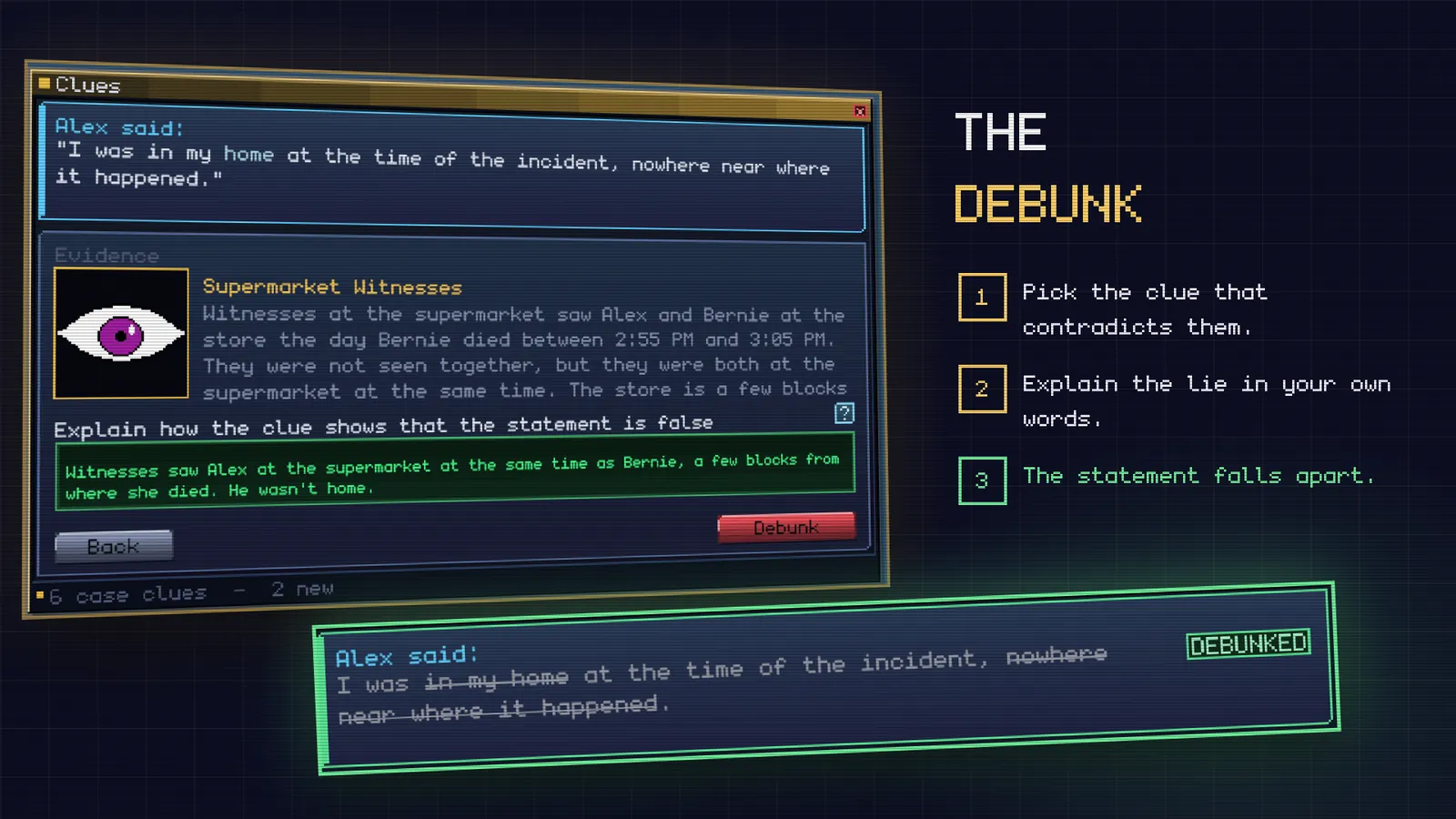
| The game | The server | My writing tools |
|---|---|---|
| Unity and C# | Python and FastAPI | Case editor in Electron and TypeScript |
| Cases are data: clues, statements, suspects and unlock rules live in files the game loads | Docker on Google Cloud Run | Forms generated from a schema, with links across files |
| Interview database, clues and debunks, progression and story events | Steam sign-in and a response cache in Firestore | Python checks that interviews match the unlock rules, and a wiki for the story |
The tools are there so that writing a new case is writing work, not programming work. Four cases are out, and two more are in progress.
Earlier prototypes
Before Pixel P.I., I built several 2D roguelikes in Unity (C#): procedurally generated dungeons, permadeath, enemy AI, and item and ability systems, with Unity's Tilemap for the levels and sprites made in Photoshop and GIMP. Balancing the difficulty and keeping procedural levels running smoothly were most of the work.